Temporal Nexus - Temporal feature
Temporal Nexus is now Generally Available for Temporal Cloud and self-hosted deployments.
Nexus connects Temporal Applications across (and within) isolated Namespaces with built-in durability, observability, and security. Each team gets their own Namespace for improved security and fault isolation, while sharing capabilities through clean service contracts. Watch the Nexus overview for a walkthrough.
Who's using Nexus?
Companies using Nexus include:
- Duolingo - Self-service infrastructure (Case study | Webinar)
- Netflix - Infrastructure orchestration (Replay talk | Webinar)
- Miro - Cross-region data migration (Replay talk)
Benefits
Connect Temporal Applications across teams, domains, regions, and clouds with:
- Stronger security posture - Built-in access controls for a specific service contract instead of broad Namespace access. Easier audits and safer cross-team collaboration.
- Higher reliability - Durable, atomic handoffs remove lost requests and hand-rolled retry and deduplication logic.
- Reduced engineering overhead - Less code, custom retry, deduplication, and refactoring work. Teams ship features faster.
- Scalable platform patterns - Enables platform-level orchestration (cross-region, cross-team) without centralizing ownership.
- New workflows and integrations - Frees teams to add more Workflows once Nexus is adopted, especially shared services or cross-team use cases.
Why separate Namespaces?
As teams and workloads grow, separate Namespaces provide:
- Security - Sensitive data (PCI, PII) stays in a restricted Namespace with its own encryption key and access controls.
- Fault isolation - Misbehaving Workers in one Namespace don't trigger rate limits or affect other teams.
- Compliance - Data residency requirements may mandate isolated regions or Namespaces.
- Ownership - Each team controls their own Namespace, Workers, and deployment lifecycle.
Before Nexus, connecting Namespaces required workarounds:
- Child Workflows - Leaky abstraction. Caller must know target Namespace, Task Queue, and Workflow policy options. Same-Namespace only in Temporal Cloud.
- Activity wrappers - Require an mTLS client per target, grant full Namespace write access, no integrated observability, error-prone boilerplate for async results.
- Bespoke gateways - Not durable, poor cross-service debugging, another service to manage and patch.
Nexus replaces all of these with a clean service contract between caller and handler, less code, and first-class observability.
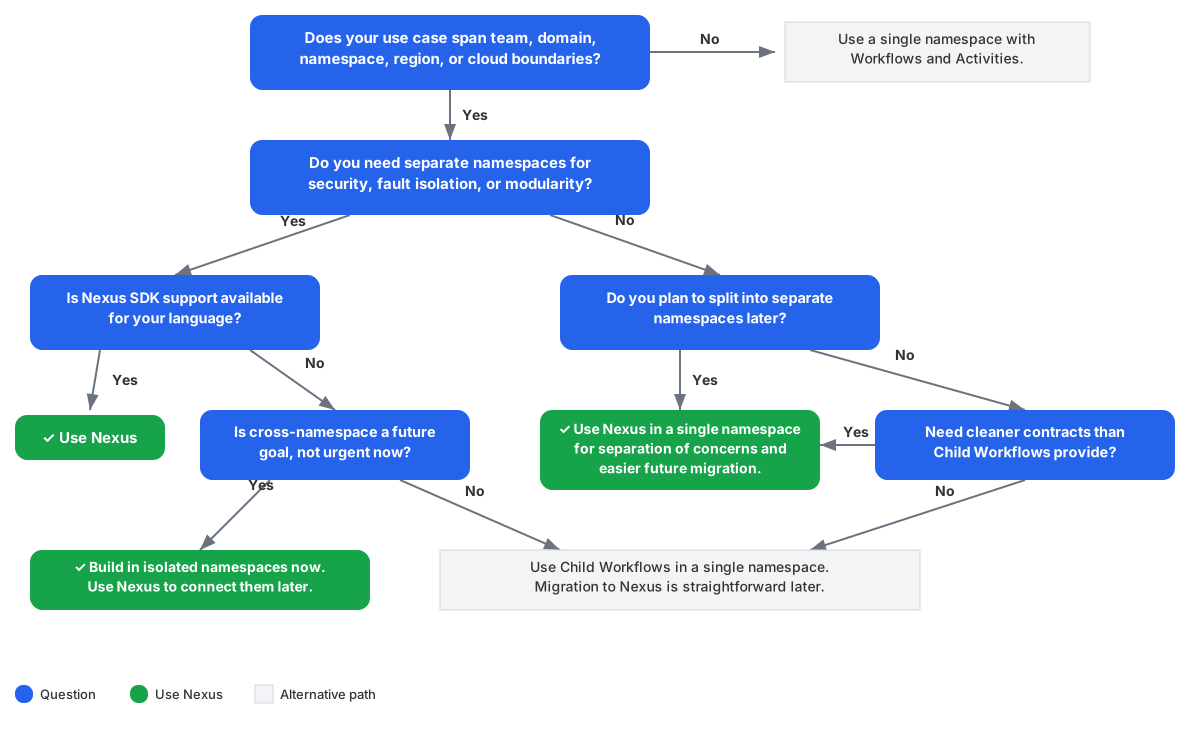
Should I use Nexus?
Use the following decision tree to help determine if Nexus is right for your use case:
Get started
Join the #nexus channel in Temporal Slack to connect with the Nexus community.
 Nexus concepts and architectureencyclopedia
 Go SDK - Nexus quick startfeature-guide
 Java SDK - Nexus quick startfeature-guide
 Python SDK - Nexus quick start (Public Preview)feature-guide
 TypeScript SDK - Nexus quick start (Pre-release)feature-guide
 .NET SDK - Nexus quick start (Pre-release)feature-guide
- Temporal Cloudfeature-guide
- Self-hosted deploymentfeature-guide